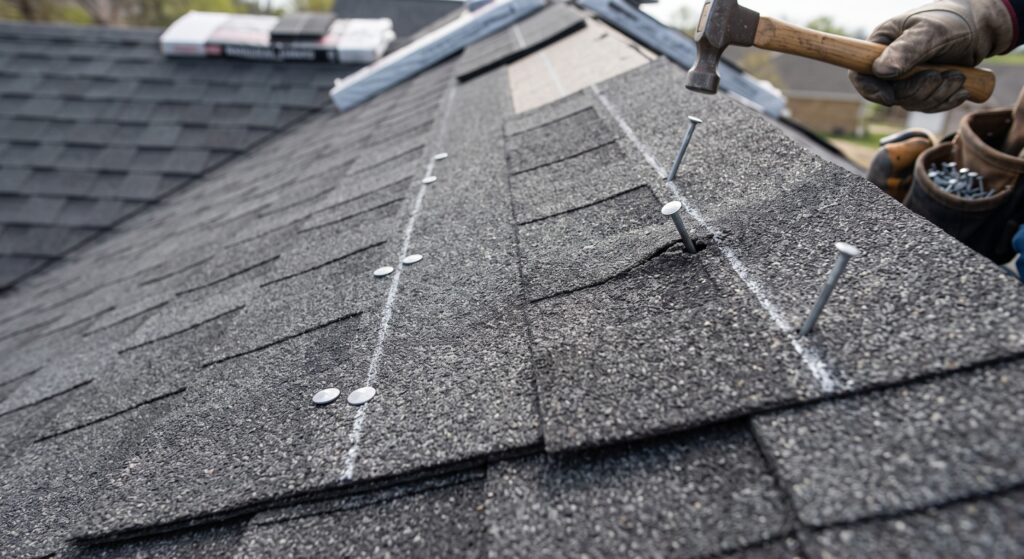
A roofing nail is a small part of an asphalt shingle system, but where that nail goes can influence how securely the shingle stays attached to the roof.
Manufacturers specify particular nailing zones and fastening patterns for their shingles. Those instructions are designed so the nails pass through the correct portions of the shingle and help neighboring courses work together as intended.
Move the nail too high, too low, or too far from its intended location, and the roof may not perform the same way.
The Nailing Zone Has a Purpose
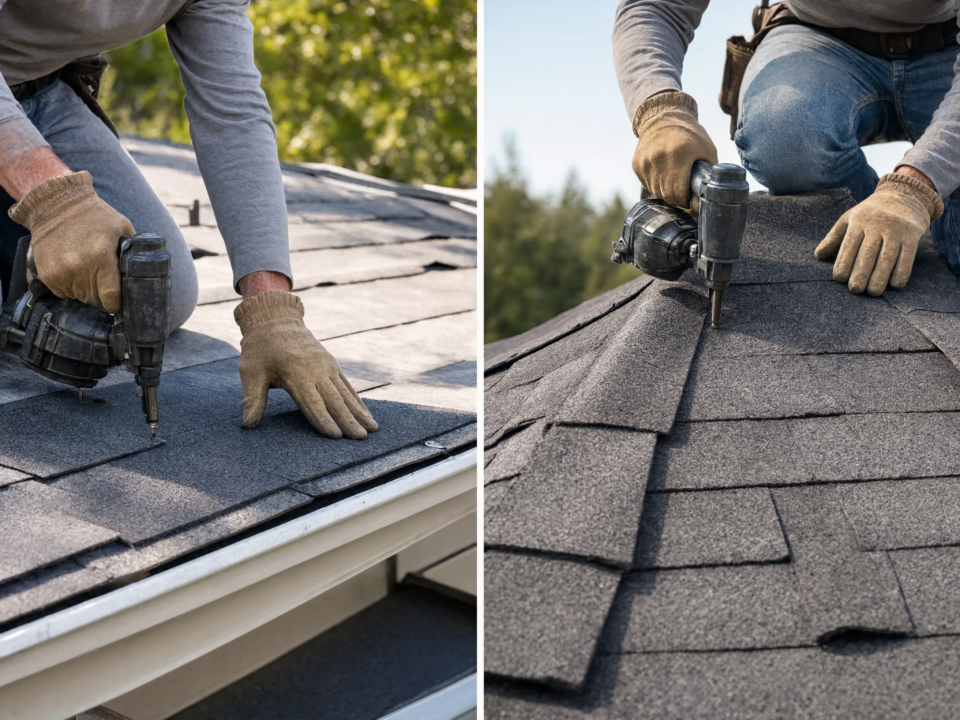
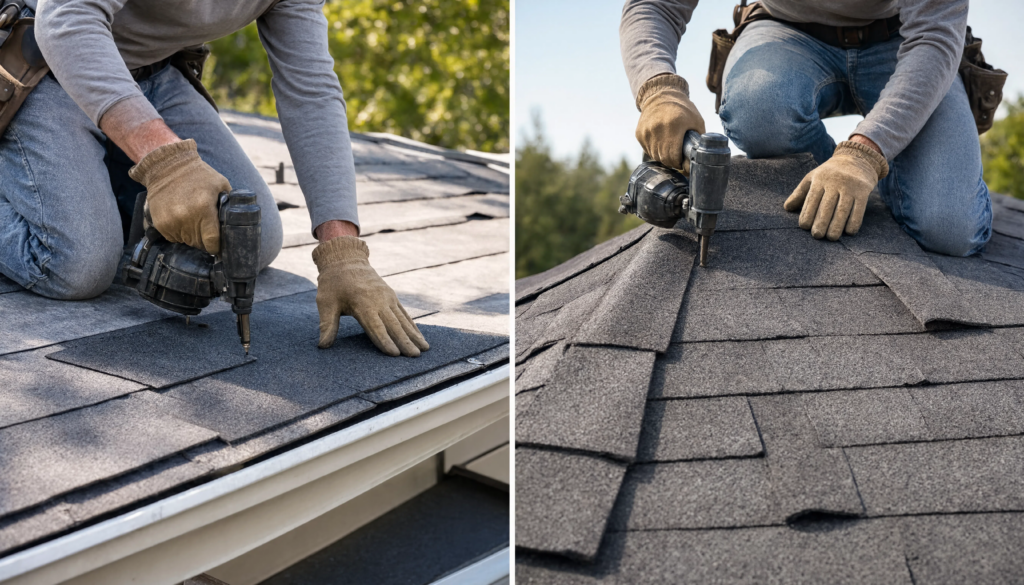
Asphalt shingles typically include a designated area where nails should be installed.
Placing the nails within that zone helps secure the shingle to the roof deck while also allowing the next course of shingles to overlap properly. Depending on the roofing product, the fastener may also need to pass through multiple layers of material.
The exact location and number of nails can vary by manufacturer, shingle type, roof slope, installation requirements, and local codes. That’s why installers should follow the specifications for the particular roofing system rather than rely on one fastening pattern for every roof.
What Happens When Nails Are Too High?
“High nailing” occurs when a nail is installed above the manufacturer’s intended fastening area.
The shingle may still look properly installed from the ground, but it may not be anchored through the sections designed to hold it securely.
That can make shingles more vulnerable to movement or lifting, especially during strong winds. High nailing is also one of the workmanship issues that can be identified during a professional roof inspection.
Nails Can Also Be Driven Incorrectly
Location isn’t the only consideration.
A nail driven too deeply can cut into or damage the shingle material instead of holding it securely against the deck. A nail that isn’t driven far enough may leave the head raised above the shingle surface.
That raised fastener can interfere with the shingles installed above it and create an uneven roofing surface.
Roofing nails should sit properly against the shingle without damaging it or protruding above it.
Wind Makes Installation Details More Important
Chicagoland roofs regularly face strong winds and severe weather.
When wind reaches the edge of a shingle, it can create uplift forces that pull against the fasteners holding the roofing material in place. Proper nail placement helps the shingles resist those forces as part of the manufacturer’s complete installation system.
A fastening problem that seems minor during installation can become a much larger roofing problem after repeated exposure to wind, rain, snow, and temperature changes.
You Probably Won’t See the Nails After Installation
Once an asphalt roof is complete, nearly all of its fasteners are covered by overlapping shingles.
That means homeowners usually can’t determine from the driveway whether every nail was positioned correctly.
It also reinforces why workmanship is such an important part of roof installation. The finished roof may look attractive, but performance depends on installation details hidden beneath the surface.
At Len Roofing & Remodeling, we pay attention to the entire roofing system, including the small installation details that homeowners may never see. Proper fastening is one of those details, and it plays an important role in helping an asphalt shingle roof perform the way it was designed to.
The Len Roofing & Remodeling Difference
When we say that we’re a top-quality home remodeling and roofing company that serves the North Shore and surrounding Chicagoland area, we back it up. We do more than simply cover the basics: we show up on time and nail it.
For more information or to schedule a consultation, call 847-768-6000 or visit our contact page.