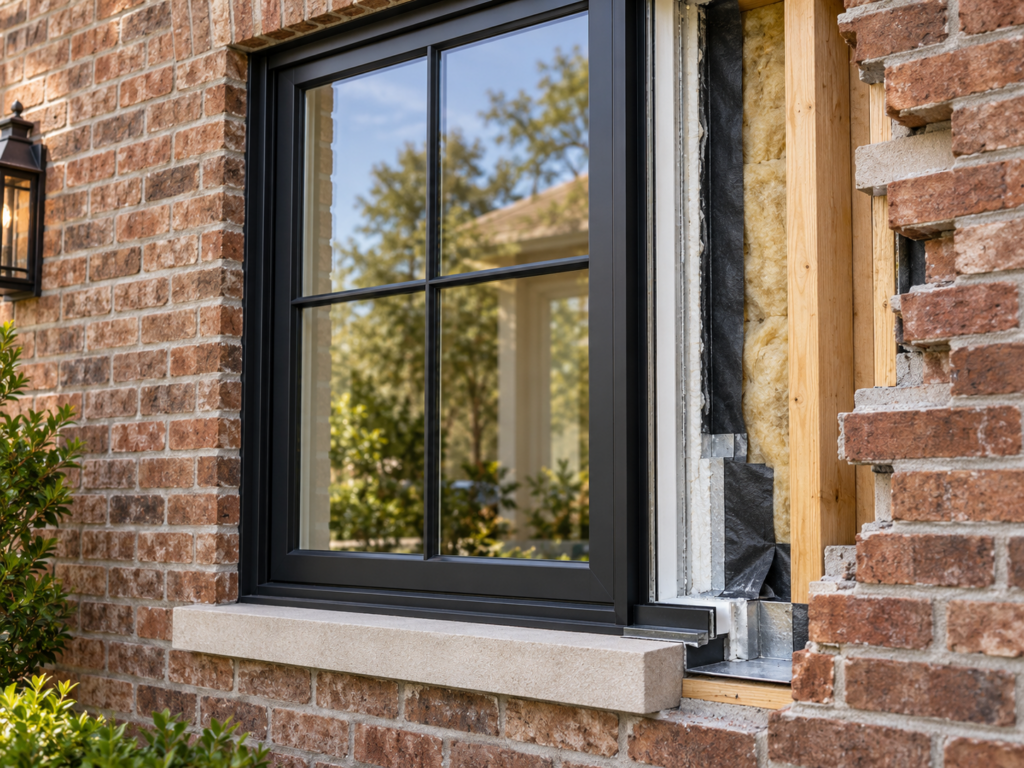
Replacing a window in a brick home involves more than removing the old unit and sliding a new one into place.
Brick creates a fixed exterior opening that gives installers less flexibility than siding or other materials. The condition of the existing frame, masonry, flashing, and surrounding wall all influence how the replacement is planned.
The Brick Opening Sets the Boundaries
With many sided homes, exterior materials offer some flexibility if an opening needs adjustment. Brick is far less forgiving.
The masonry opening generally determines the available space for the new window. That makes precise measurements especially important, including the width, height, depth, and condition of each opening. Older brick homes also develop small irregularities as they age, so two windows that look identical from the street might not have exactly the same dimensions.
A properly sized replacement needs enough room for installation, insulation, and sealing without leaving oversized gaps around the frame.
Removing the Old Window Takes Extra Care
Window removal also requires attention to the surrounding masonry.
Aggressive removal techniques risk damaging brick, mortar, interior finishes, or the weather barrier behind the exterior wall. The installer needs to understand how the existing window was attached and remove it without turning a window project into unnecessary masonry repair.
If the existing frame has extensive rot, water damage, or deterioration, a full-frame replacement gives the installer access to the entire opening and problems hidden behind the old unit.
Inspect the Masonry Around the Opening
The masonry around the opening deserves attention too.
Cracked mortar, deteriorated brick, or movement around the sill or lintel can affect the finished installation. Sealing a new window against damaged masonry does not correct the underlying exterior problem.
Identifying those conditions before the window is ordered helps prevent surprises once removal begins.
Water Management Is Especially Important
Brick looks solid, but a brick exterior is not automatically waterproof.
Rainwater gets managed through the wall system behind the masonry, making flashing and sealing around the window essential.
During replacement, the installer needs to evaluate how the new window connects with the existing weather barrier and how water will move around and away from the opening. Exterior sealant, flashing, sill details, and drainage all play a role.
Poor detailing around the perimeter often leads to leaks that appear far from the original entry point.
The Finished Window Still Needs to Look Right
Brick also makes exterior appearance less forgiving.
Gaps between the new frame and masonry need a finished solution that looks intentional. Trim profiles, frame dimensions, sill details, and sealant lines all affect whether the new window looks naturally integrated into the house.
A well-planned installation improves more than appearance. Proper sizing, insulation, and sealing also influence drafts, indoor temperatures, and the everyday comfort new windows provide.
Brick does not make window replacement impossible; it simply leaves less room for shortcuts.
The Len Roofing & Remodeling Difference
When we say that we’re a top-quality home remodeling and roofing company that serves the North Shore and surrounding Chicagoland area, we back it up. We do more than simply cover the basics: we show up on time and nail it.
For more information or to schedule a consultation, call 847-768-6000 or visit our contact page.